
What Seasoning Makes the Best Homemade Sausage?

A Beginner's Guide Based on Type

Every great Sausage starts the same way, with a focus on flavor - what you want to experience in the first bite, and also what you don't. Before the casing, before the smoker, before the grind, there's a blend of herbs and spices that gives each sausage style its identity, usually based on local terroir (local vegetation that inspires local wines and cuisine).
Breakfast sausage (the American Sausage) is often linked to the addition of Sage, an herb that grew prolifically on and around American farms of the Appalachian South. Sage preserved well with drying for harsh winter months and was used frequently to enhance game meat's deep, savory flavor.
For the same reason, the terroir of spices like fennel and herbs that flourished in the countryside of Italy notes that sausages and Polish kielbasa ("sausage") have the unmistakable depth because of marjoram and garlic.
Seasoning is where that Sausage becomes an authentic, ethnic Sausage. It's the formulation of local ecology blended directly into the chopped protein common in the local region, preserved and enjoyed by those closest to the land of its origin.
Whether you're making your first batch of breakfast links or working your way through a full spread of styles, this guide covers everything you need to know: what to use, how much, and why it works, so every batch you make is better than the last.
The Short Answer
The best seasoning for the homemade Sausage depends on the level of authenticity you are attempting to recreate. Breakfast sausage is built on sage, black pepper, and a touch of sweetness. Italian Sausage relies on fennel seed and garlic. Bratwurst gets its character from nutmeg and white pepper. Polish kielbasa leans on marjoram and garlic. No matter the style, every great Sausage starts with the same foundation: the right amount of salt, quality of protein, and freshly measured spices. If what it takes to make the best sausage recipe is based on such a short list of ingredients that are closest to the flavor profile of the original, then what can most easily ruin the best flavor is additions and subtractions from the original recipe.
The most important thing you want in your recipe is a short, clean list of ingredients with absolutely minimal additions and subtractions. Keep it simple - that's what the best Sausage Makers of times long gone did.
The Foundation: What Every Sausage Seasoning Starts With

Before you think about sage or fennel or paprika, there are three things every Sausage needs regardless of style.
Salt is the most important ingredient in any sausage blend, not just for flavor, but for food safety and texture. Salt draws out proteins in the meat that bind everything together into a cohesive, sliceable, juicy sausage. Without enough of it, your Sausage falls apart and tastes flat. The most reliable approach is to measure by weight rather than volume: aim for approximately 2% salt by weight (for Fresh Sausage) of your total meat, roughly 1.5 to 2 teaspoons per pound, depending on the salt you use. One important note: avoid iodized table salt. The iodine treatment can impart a subtle metallic flavor, especially noticeable in cured or fermented sausages. Kosher salt or pure sea salt is the right call.
Black pepper rounds out the foundation. It's present in nearly every sausage style in some form, coarse, fine, or cracked, and provides the baseline heat that lets every other spice do its job. Use 1-2 tsp as a baseline for most Fresh Sausage recipes to add a touch of character to your recipe.
Fat isn't optional. A minimum of 20% fat, max of 30%, is what gives Sausage its juicy, satisfying texture. Go leaner than that, and you end up with something dry and crumbly that no amount of seasoning will save. If you're working with lean meats like venison or turkey, you'll need to add some form of fat content, either directly with cuts like fat-back, beef suet, or a fatty mix of ground pork (most commonly, 50/50 fatty pork to lean game meat). This is one of the most common mistakes beginners make, and it's worth getting right from the start. For a deeper look at how fat affects the grind and texture, check out our guide to Sausage Making 101: Grinding.
Get these three right, and everything else is about building flavor on top of a solid base. Of course, Garlic and Onion are very close behind these 3.
Seasoning by Sausage Style

This is where the real fun begins. Here's how to season each major style, what makes each one distinctive, and the most common mistake people make with each.
Breakfast / Country Sausage
Defining seasonings: Sage, black pepper, salt, brown sugar or maple syrup, thyme, red pepper flakes (for spicy variants)
Breakfast sausage is the gateway for most home sausage makers, and sage is the reason it tastes the way it does. That earthy, slightly piney flavor is unmistakable, and it's all sage. Start with approximately 2 teaspoons of rubbed sage per pound of meat and build from there.
Brown sugar or a splash of maple syrup adds a subtle sweetness that beautifully balances the salt and pepper. Thyme and a pinch of nutmeg add background warmth without announcing themselves. For a spicy version, add cayenne or red pepper flakes to taste.
Beginner tip: Make a small test patty before committing to the whole batch; some people even take a small quarter-size meatball and microwave it for about a minute for a super-fast taste test. Breakfast seasoning is easy to dial in, but the sage-to-sugar balance is personal, and a quick fry or nuke will tell you everything.
Common mistake: Too much sage. It's a powerful herb that can easily dominate. Start conservatively, fry your test patty, and add more only if needed. We even make a custom blend for a grocer that omits the sage entirely, for a sage-free blend for their customers. Its proponents and detractors are similar to cilantro/coriander in Mexican dishes; some people have a love/hate relationship with these herbs!
Try our small-batch blend of Breakfast Sausage, with a formula originating from our founder, Rytek Kutas. We never make more than we can sell in a month; it's in constant rotation in our mixing room. Always fresh. Never more ingredients than those necessary.
Fresh Pork Sausage
Defining seasonings: Salt, black pepper, sage or thyme, garlic, sometimes a touch of red pepper.
Fresh pork sausage is the most versatile style on this list; think of it as the blank canvas of the sausage world. It's simple, clean, and meant to let the pork's quality speak for itself. Seasoning is present but restrained: salt and pepper form the base, with sage or thyme adding just enough herbal character to make it feel like a breakfast sausage rather than seasoned ground pork.
Garlic powder adds savory depth without overwhelming the pork flavor. Some makers add a small amount of red pepper for a subtle background heat.
Beginner tip: This is the best style to start with if you're new to sausage making. The simplicity of the blend means fewer variables, and it's very forgiving.
Common mistake: Over-seasoning. The whole point of fresh pork sausage is the clean pork flavor. Trust the simplicity.
Morning Edge Pork Sausage (TSM Blend)
Defining seasonings: Black pepper, sage, red pepper, a proprietary blend of complementary spices.
Morning Edge is a classic style with a slightly bolder, spicier profile than a standard breakfast blend. It sits between a mild country sausage and a fully spicy link, with enough heat to wake you up, balanced enough to pair with eggs without overpowering them.
If you're blending your own, think of it as a breakfast sausage with more assertive pepper notes and a touch more complexity in the spice mix. Our Morning Edge Pork Seasoning is one of our most popular in-house blends, crafted to deliver that balanced heat-to-herb ratio right out of the bag.
Beginner tip: This is a great style for anyone who finds traditional breakfast sausage a little mild. It's still approachable but has more personality.
Common mistake: Skipping the rest period. The spice complexity in a blend like this really needs time to develop in the meat, at least 3 hours in the fridge, overnight if you can manage it.
Sweet & Hot Italian Sausage

Defining Spices: Fennel seed (essential), garlic, red pepper flakes, paprika, black pepper, parsley, basil.
If breakfast sausage belongs to sage, Italian Sausage belongs to fennel. Crushed fennel seed is the non-negotiable ingredient - without it, you just have seasoned pork. With it, you have Italian Sausage.
Sweet Italian uses fennel, garlic, black pepper, mild paprika (optional), and a touch of basil. Hot Italian keeps the same base but increases the red pepper flakes significantly, up to 1 tablespoon per 5 pounds of meat for serious heat.
One technique worth knowing: crush or coarsely grind your fennel seeds before adding them to the mix. Whole seeds don't release their oils as effectively, and you'll get noticeably more flavor from the same amount of spice.
Beginner tip: If you're making sweet Italian for the first time, start with the fennel and garlic, fry your test patty, and add heat from there. It's much easier to add spice than to take it away.
Common mistake: Using fennel pollen instead of fennel seed without adjusting the quantity. Fennel pollen is significantly more potent - a little goes a very long way.
Bratwurst
Defining seasonings: White pepper, nutmeg, ginger, mace, caraway (optional), salt
Bratwurst is where the seasoning profile shifts from herb-forward to warm-spice-forward, and that distinction is what gives it its character. White pepper instead of black gives a cleaner, more subtle heat. Nutmeg and mace add that unmistakable old-world warmth that makes bratwurst taste like bratwurst.
Traditional bratwurst is typically made with a mixture of pork and veal, though pork-only versions are common among home cooks. The fat ratio is especially important here; bratwurst should be juicy and snappy, and that texture comes from fat and proper mixing as much as from seasoning.
Beginner tip: Grate your nutmeg fresh if you can. Pre-ground nutmeg loses its volatile oils quickly, and fresh nutmeg makes a noticeable difference in a spice-forward blend like bratwurst.
Common mistake: Using black pepper instead of white. It changes the flavor profile more than you'd expect - black pepper's sharpness competes with the warm spices rather than supporting them.
Polish Sausage / Kielbasa
Defining seasonings: Garlic (heavy), marjoram, black pepper, salt, mustard seed (optional).
Kielbasa is defined by two things: garlic and marjoram. The garlic should be generous, fresh, or granulated; it provides the dominant savory note. Marjoram, a mild herb in the oregano family, gives Polish Sausage its distinctive, slightly floral, herbaceous quality that sets it apart from other styles.
Most traditional kielbasa is smoked after stuffing, which adds another layer of flavor and extends shelf life. Fresh kielbasa (biała kiełbasa) skips the smoking step and is typically boiled or pan-fried.
Beginner tip: Don't underestimate the marjoram. It's a quiet herb that doesn't announce itself the way sage or fennel does, but it's what makes kielbasa taste authentically Polish. Don't skip it or substitute oregano - the flavor is noticeably different.
Common mistake: Under-seasoning the garlic. Kielbasa should have a pronounced garlic character. If you taste the raw mixture and think the garlic is almost too much, it's probably just right once cooked.
Andouille
Defining seasonings: Garlic, onion, cayenne, paprika, black pepper, thyme, oregano (optional).
Andouille is a heavily spiced, smoked Cajun sausage with a bold, assertive flavor profile. The heat comes from cayenne and black pepper working together, while paprika adds color and a mild sweetness that slightly tempers the heat. Garlic is prominent, similar to kielbasa, but with more heat.
Traditional andouille is smoked for an extended period over pecan or hickory wood or a similar hardwood, which is as important to its flavor as the seasoning itself. At home, a good electric or cabinet smoker and quality wood chips will get you very close to the real thing.
Beginner tip: Andouille is not a beginner sausage - it involves smoking, in which case Insta Cure #1 is highly recommended (1tsp / 5 lbs meat). But if you've made a few fresh sausages and want to level up, it's an incredibly rewarding project.
Common mistake: Skipping the smoke. Seasoned andouille without smoking is just spicy pork sausage - the smoke is half the flavor. For more on getting the most from your smoker, check out our post on the Benefits of Using a Stainless Electric Smoker.
Summer Sausage
Defining seasonings: Mustard seed, black pepper, garlic, curing salt (Insta Cure #1), smoke flavoring or actual smoking.
Summer sausage occupies a unique place in this list because seasoning alone doesn't make it what it is - smoking and giving that subtle tang flavor do. Insta Cure #1 is essential for any Summer Sausage recipe. It's not optional, and it's not interchangeable with regular salt. The nitrites in curing salt prevent dangerous bacterial growth during the low-and-slow smoking or drying process that gives summer Sausage its vibrant color, flavor (partially), and shelf stability.
The seasoning profile itself is relatively simple: mustard seed, black pepper, and garlic, but the fermentation or curing process develops a complex, tangy flavor that no amount of seasoning alone can replicate. For tang, Encapsulated Citric Acid is a common solution; it is a dry ingredient that releases acidity when it reaches about 150F internally. The more natural way to add a subtle tang is to reduce the pH of the meat (acidifying) with a starter culture (such as Bactoferm F-LC) before smoking/cooking it. This would be a semi-dry cured smoked Sausage. It is a little trickier to make since the environment has to be well controlled for warm temperature and humidity. Still, with the starter culture's assistance and basic know-how, it's actually quite easy. Let us know if you'd like us to make a post on Semi-Dry Cured Summer Sausage using these methods!
Beginner tip: If you're new to sausage making, get comfortable with fresh sausages first before attempting summer sausage. The curing process requires attention to food safety details that are important to understand before diving in.
Common mistake: Treating summer sausage like fresh Sausage and skipping the curing salt. This is a food safety issue, not just a flavor one.
Chorizo (Mexican or Spanish?)

Defining Spices: Smoked paprika (essential in Spanish Chorizo), garlic (very prominent), cayenne pepper, cumin (for Mexican Chorizo), oregano, red wine vinegar (or white wine).
Chorizo's signature deep red color and bold smoky flavor come from one ingredient above all others: smoked paprika (pimentón). Use it generously—Spanish chorizo isn't shy about its seasoning. Garlic is equally important, creating the rich savory foundation that complements the paprika. Traditional Spanish-style chorizo is cured, often smoked, and dried until ready to slice and enjoy. Mexican-style chorizo, by contrast, is a fresh sausage that's seasoned differently, cooked before eating, and often includes spices such as cumin along with chile peppers.
A small amount of red wine or red wine vinegar is common in many Spanish recipes, adding a subtle tang that brightens the rich pork and paprika flavors without overpowering them.
Beginner tip: For your first chorizo, make Mexican-style (fresh, uncured); it's much more forgiving and doesn't require curing equipment or extended drying time. Spanish Chorizo is usually cured (Insta Cure #2) and dried for preservation.
Common mistake: Using sweet paprika instead of smoked. The smoky depth of smoked paprika is what makes chorizo taste like chorizo. Sweet paprika gives you color but not the right flavor.
The Fry Test: Your Most Important Seasoning Tool

No matter how carefully you measure your spices, you should always cook a small test patty before stuffing casings or freezing your batch. Always.
Here's why: seasoning perception changes with heat. A blend that may seem underseasoned raw can taste perfectly balanced cooked, and vice versa. The fry test is your chance to catch imbalances before they're locked into an entire batch.
Form a small patty, about the size of a silver dollar, and cook it in a dry skillet over medium heat until cooked through. Taste it carefully. Ask yourself: Is the salt right? Is one spice dominating? Does it need more heat, more sweetness, more herbal additions?
Then adjust, mix, and fry another test patty before you commit.
This single habit will improve your Sausage more than any single ingredient. For a deeper look at how mixing affects seasoning distribution, our Sausage Making 101: Mixing guide walks through exactly what to look for.
A Simple Homemade Sausage Seasoning Blend

Not ready to dive into a style-specific blend yet? This all-purpose pork sausage seasoning is a great starting point. Everything here is available at any grocery store, and it produces a flavorful, versatile sausage that works as patties, links, or crumbled into a pan sauce.
Makes enough for 2 pounds of ground pork (70/30 lean-to-fat ratio)
- 2 tsp kosher salt
- 1 tsp black pepper, freshly ground
- 1½ tsp rubbed sage
- ½ tsp dried thyme
- ½ tsp garlic powder
- ½ tsp red pepper flakes (optional, for mild heat)
- 1 tbsp brown sugar
- 1 fl oz ice-cold water
Method: Combine all dry spices and mix thoroughly. Add to your ground pork along with the ice water. Mix by hand until the meat feels tacky and the spices are evenly distributed, about 2 minutes. Let it rest in the refrigerator for at least 3 hours before cooking, stuffing, or freezing. Always fry a small test patty first.
This blend is intentionally simple - think of it as your foundation. Once you're comfortable with it, start layering in the style-specific seasonings above to explore new directions.
Pro Tips for Better Sausage Seasoning
These are the habits that separate consistently great Sausage from inconsistent results.
Weigh your salt, don't measure it by volume. Different salts have dramatically different densities. A teaspoon of fine sea salt contains nearly twice as much sodium as a teaspoon of kosher salt. Weighing to 2% of your meat weight removes all that guesswork.
Crush or coarsely grind whole spices before adding. Whole fennel seeds, coriander, and mustard seeds don't release their oils effectively unless they're cracked open. A quick pass in a mortar and pestle or a spice grinder makes a noticeable difference in flavor intensity.
Rest the seasoned meat overnight. After mixing your seasoning into the meat, let it rest in the refrigerator for at least 3 hours - overnight is better. The salt continues to work, drawing moisture out and then back in with the spices dissolved throughout. The flavor in a rested sausage is noticeably more integrated and complex than that of one stuffed immediately.
Keep everything cold, always. This applies to seasoning as much as to the meat itself. If your meat warms up during mixing, the fat smears, and the texture suffers, no amount of great seasoning will fix a greasy, mealy sausage. Work quickly, work cold.
Use fresh spices. Ground spices lose their volatile oils over time. If your paprika or sage has been sitting in the cupboard for two years, it's contributing color but not much flavor. Fresh spices, ideally ground or crushed within the last six months, make a real difference.
Start conservatively with dominant spices. Sage, fennel, cayenne, and smoked paprika are all powerful. It's easy to add more after a fry test. It's impossible to take away.
Common Seasoning Mistakes to Avoid
Using iodized salt. The iodine imparts a faint metallic flavor that's subtle in fresh sausages but noticeable in cured and fermented ones. Always use kosher salt or pure sea salt.
Skipping the rest period. Mixing and immediately cooking produce a sausage in which the spices sit on the surface of the meat rather than penetrating it. The difference in flavor between a rested and an unrested sausage can be significant.
Over-relying on one dominant spice. Too much paprika turns every bite into paprika. Too much sage overwhelms the pork. Balance is the goal - your dominant spice should be recognizable, not the only one you can taste.
Seasoning warm meat. Salt draws moisture out of the meat, and if the meat is warm, that moisture evaporates rather than being reabsorbed with the spices. Season cold, mix cold, rest cold.
Measuring spices carelessly. A level teaspoon and a heaped teaspoon of ground sage are very different things. Be consistent, especially when developing a blend you want to repeat.
Not adjusting for meat type. Venison, turkey, and chicken all have distinct flavors from pork and require different seasoning adjustments. Venison is gamey and benefits from bolder seasoning and the addition of fat. Poultry is mild and can be overwhelmed by heavy sage or fennel.
When to Use a Pre-Made Seasoning Blend
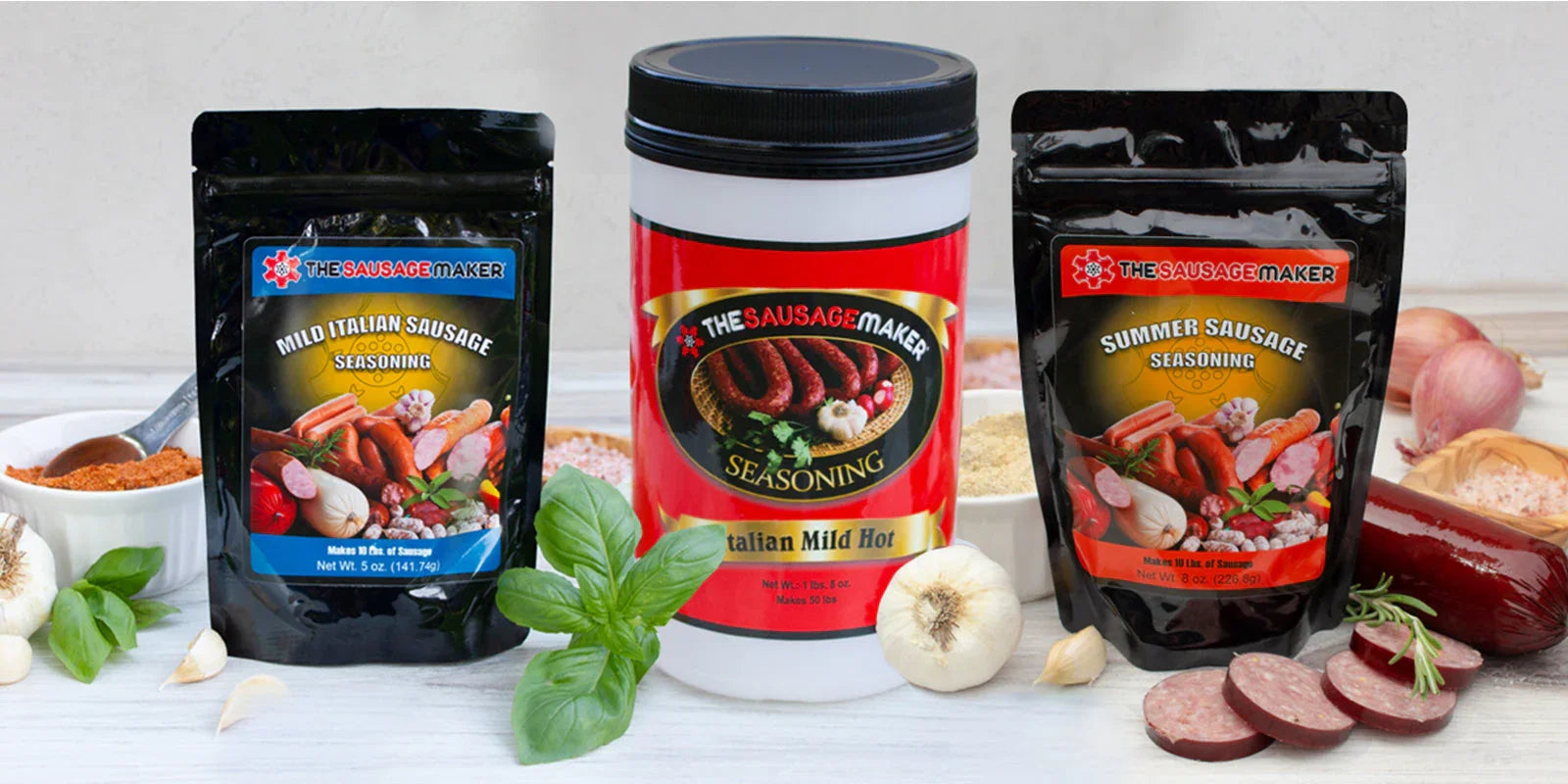
There's no shame in reaching for a pre-made seasoning blend, and for many styles, it's genuinely the smarter choice.
Here's why: developing a seasoning blend from scratch that's balanced, consistent, and authentic to a specific style takes time, testing, and many wasted batches. A well-crafted pre-made blend removes all of that uncertainty. You know the ratio is right. You know the spices are fresh. You know the result will taste the way it's supposed to.
At The Sausage Maker, our seasoning blends are developed in-house by experienced sausage makers who have spent years dialing in the exact ratios for each style. Our Breakfast Sausage Seasoning, Italian Sausage Seasoning, Bratwurst Seasoning, Morning Edge Pork Seasoning, and the rest of our lineup aren't generic blends - they're crafted to perform in homemade Sausage specifically.
The best approach for most home makers is to start with one of our blends to understand what a well-seasoned sausage of that style should taste like, then experiment from there once you have a reference point. For a great first project using a proven blend, our Homemade Breakfast Sausage Patties recipe is a perfect starting point.
| Sausage style | Key seasonings | Flavor profile |
|---|---|---|
| Breakfast / Country | Sage, black pepper, brown sugar, thyme | Sweet-savory · Mild |
| Morning Edge Pork | Sage, black pepper, red pepper, spice blend | Herbal · Bold pepper |
| Fresh Pork | Salt, black pepper, sage or thyme, garlic | Clean · Simple |
| Sweet Italian | Fennel seed, garlic, basil, paprika | Fennel-forward · Mild |
| Hot Italian | Fennel seed, garlic, red pepper flakes, paprika | Fennel-forward · Spicy |
| Bratwurst | White pepper, nutmeg, mace, ginger | Warm spice · Old-world |
| Polish / Kielbasa | Garlic, marjoram, black pepper | Garlic-forward · Herbal |
| Andouille | Garlic, cayenne, paprika, thyme, black pepper | Smoky · Very spicy |
| Summer Sausage | Mustard seed, black pepper, garlic, curing salt | Tangy · Smoky |
| Chorizo | Smoked paprika, garlic, cayenne, cumin, vinegar | Smoky · Bold · Spicy |
Stock Your Seasoning Shelf
Whether you're building your own blends from scratch or reaching for one of our in-house mixes, The Sausage Maker has everything you need:
- Breakfast Sausage Seasoning, Sage-forward, perfectly balanced sweet-savory
- Hot Italian Sausage Seasoning, Fennel and heat, ready to go
- Bratwurst Seasoning, Warm spices, old-world character
- Morning Edge Pork Seasoning, Bold pepper notes, breakfast with personality
- Premium Spices & Herbs, 200+ options for building your own blends from scratch
Great Sausage starts with great spices or time-tested small-batch seasonings. We've got you covered either way you want to try your hand at making Sausage at Home!


